Welcome!

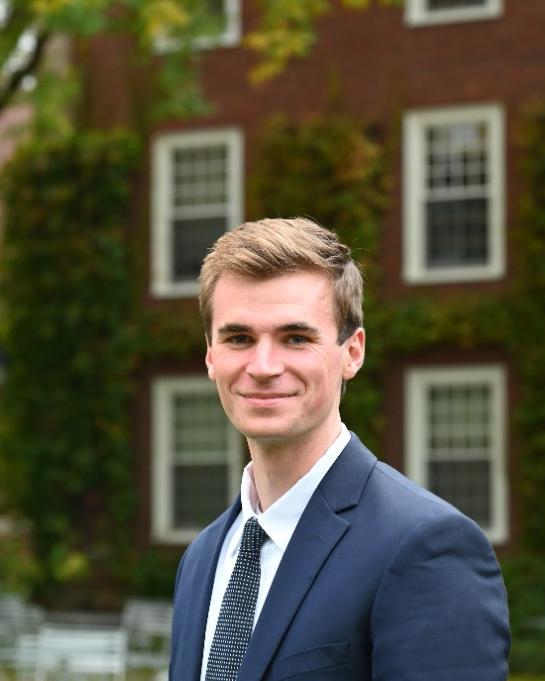
I'm Nathaniel. I love engineering and the physical sciences, particularly as they pertain to climate and energy. I am excited by private enterprise as a vehicle for levered change and accelerated technical advancement. I therefore recently finished a master's in engineering sciences and an MBA at Harvard, and previously studied mechanical and aerospace engineering and engineering physics at Princeton.

I have worked with startups from seed through growth in the US, the EU and China.

Nathaniel Shields

In Brief

What I do

I graduated from a master's program earlier in the summer and now work in technoeconomics and compute product at Panthalassa, a firm bringing wave energy to market for compute.

Prior to my master's, I spent two years at VEIR, a startup constructing the first overhead superconducting power transmission lines, where I owned electromagnetic modeling and design optimization (published), designing all the superconducting components, as well as some product functions. I also contributed to the techno-economic model and to industry publications, and led the company's ARPA-E project. VEIR grew from fourteen to sixty people during my tenure.

Why?

I believe cheap, clean power is basic to unencumbered progress.

I work at Panthalassa to attempt to bring a new source of clean, firm power to market. Today, cheap, low-latency, global data transfer systems like Starlink and widespread energy demand for compute enable the development of even physically remote energy resources such as the highest quality wave resources.

I worked at VEIR to accelerate transmission capacity expansion.

One primary strategy for decarbonization is the electrification of the emission-intensive sectors and clean production of that electricity. The terminal technologies are well capitalized: solar and wind are the domain of traditional financial institutions, and every PhD founds a battery startup. Moving the power to its new consumers is the part still short of attention.

Conventional lines need space, and NIMBYism and environmental protection make new corridors close to impossible to site. Superconducting lines carry roughly five times the power of a conventional AC line, or ten times DC, in the same corridor. Emissions are sensitive to this: a one percent change in the rate of transmission build (in 2022) could cut US 2030 emissions by 800 million tons, nearly a fifth.

Interests

Energy systems; nuclear engineering, chiefly fusion; the economics of hardware businesses; natural language processing; and stone carving.

Contact